


Ethereum Staking Yield: Current ETH APR & Staking Rewards
Ethereum staking allows ETH holders to earn rewards by participating in Ethereum’s Proof-of-Stake network. Unlike a fixed interest rate, Ethereum staking yield changes over time depending on the amount of ETH staked, validator performance, network activity, fees, and the staking method you use.
Current Ethereum Staking Yield
As of August 2026, the Ethereum network staking rate is approximately 2.6% annually, although the exact figure varies by source, methodology, validator performance, and staking provider.
Current Ethereum staking snapshot
Network staking APR: approximately 2.6%
Total ETH staked: approximately 42.5 million ETH
Share of ETH staked: approximately 35%
Minimum for a solo validator: 32 ETH
Staking with less than 32 ETH: possible through pooled or third-party staking services
The rate shown by a wallet or staking provider may differ from the Ethereum network rate. Provider fees, validator performance, reward distribution, MEV, compounding, and other factors can affect the final yield received by the user.
Important: Ethereum staking rewards are variable and are not guaranteed. Rates can increase or decrease over time.
ETH Staking Rate
The Ethereum staking rate refers to the annual percentage yield (APY) that validators and delegators earn from staking ETH. It’s influenced by several factors:
- The total amount of ETH staked on the network.
- The number of active validators.
- Transaction fees collected from network activity.
- Validator uptime and performance.
When fewer people stake, rewards are higher to attract participation. As staking grows, rates decrease because rewards are distributed among more validators.
On average, Ethereum staking yields between 1% and 5% APY, though some wallets and staking pools may offer different rates. Walletverse currently provides a 1.76% APY for Ethereum staking, ideal for users who prefer self-custody and secure staking directly from a mobile app.
What Is Ethereum Staking Yield?
Ethereum staking yield is the return earned by committing ETH to Ethereum’s Proof-of-Stake consensus mechanism.
Ethereum transitioned from Proof of Work to Proof of Stake through The Merge in September 2022. Instead of miners competing to create blocks, Ethereum now relies on validators.
Validators help the network by:
attesting to blocks;
proposing new blocks when selected;
remaining online and synchronized;
following Ethereum’s consensus rules.
In return for performing these duties correctly, validators can receive ETH rewards.
A user running a solo Ethereum validator needs at least 32 ETH. Users with less ETH can access staking through pools and other staking services, although these solutions introduce additional fees and risks.
Where Does Ethereum Staking Yield Come From?
Ethereum staking rewards do not come from a single source. Validator revenue can include several components.
1. Consensus Layer Rewards
Ethereum issues ETH to validators for performing consensus duties such as attestations and block proposals.
The amount earned per staked ETH generally changes as the amount of ETH securing the network changes. When more ETH is staked, rewards are distributed across a larger amount of capital, which can reduce the base reward rate per ETH.
2. Priority Fees
When a validator proposes a block, it may receive priority fees paid by Ethereum users for transactions included in that block.
These rewards depend on network activity and therefore fluctuate.
3. MEV
Block proposers may also receive Maximal Extractable Value, or MEV.
MEV revenue is variable and is not earned evenly by every validator. Whether a staking service passes these rewards to users also depends on the provider and its reward methodology.
Because Ethereum staking income has multiple components, there is no permanently fixed “ETH interest rate.”
Why Does Ethereum Staking Yield Change?
ETH staking yield is variable rather than fixed.
Several factors influence the rate.
Total ETH Staked
The amount of ETH participating in staking is one of the most important factors.
As more ETH enters staking, Ethereum does not increase validator issuance proportionally. As a result, the base reward earned per ETH generally declines as staking participation grows.
Validator Performance
Validators need to remain online and perform their duties correctly.
Missed attestations, downtime, or other performance issues can reduce rewards.
Ethereum Network Activity
Periods of higher Ethereum activity can increase execution-layer revenue such as priority fees.
Lower activity can reduce this portion of validator income.
MEV
MEV can increase total validator revenue, but it is highly variable and should not be treated as a guaranteed component of staking yield.
Staking Provider Fees
If you do not operate your own validator, a staking provider may charge a percentage of rewards or another service fee.
The rate a user actually receives can therefore be lower than the gross Ethereum network reward rate.
Compounding
The frequency and method of reinvesting staking rewards affect APY.
Two services can start with a similar underlying reward rate but display different APYs because their compounding assumptions are different.
How Much Can You Earn Staking Ethereum?
The amount of ETH you can earn depends primarily on:
how much ETH you stake;
the staking rate;
how long you remain staked;
fees;
validator performance;
whether rewards are compounded.
Ethereum Staking With Walletverse
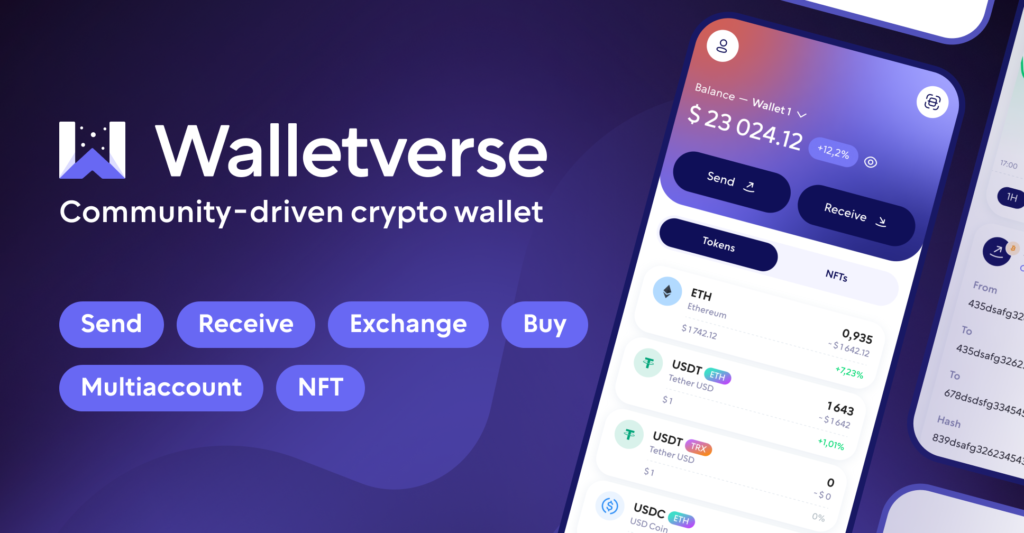
Walletverse is a self-custody crypto wallet designed to let users manage digital assets from a mobile device while maintaining control of their wallet credentials.
Eligible users can access Ethereum staking from the Walletverse app and view the estimated staking rate before confirming a staking transaction.
Because Ethereum staking rewards are variable, the current ETH staking APY shown in Walletverse can change over time.
Before staking, review the current rate and applicable terms in the app rather than relying on a historical APY quoted in an article.


How to Stake ETH With Walletverse
Download Walletverse and create or import your wallet.
Add ETH to your wallet.
Open the Ethereum staking option.
Enter the amount of ETH you want to stake.
Review the estimated reward rate, fees, and staking conditions.
Confirm the transaction.
Always verify transaction information and staking terms before signing an onchain transaction.
Ethereum Staking Yield: Key Takeaways
Ethereum staking provides ETH-denominated rewards for participating in the security of the Ethereum network.
The most important points to remember are:
Ethereum staking yield is variable, not fixed.
Current network rates are around the mid-2% annual range, but they change over time.
The rate offered to users can differ from the network rate because of fees, validator performance, MEV, reward methodology, and compounding.
A solo validator requires at least 32 ETH, but pooled and third-party staking can support smaller amounts.
APY and APR are not the same.
Higher APY can mean additional risk.
Staking rewards do not protect against a decline in the market value of ETH.
Compare the net yield, fees, custody model, withdrawal conditions, and risks rather than choosing a staking method based only on the headline rate.
FAQ
Most frequent questions and answers
No. Ethereum staking rewards fluctuate over time. The number of validators, total ETH staked, execution-layer activity, validator performance, fees, and compounding can all influence the rate.
Yes. Staking involves risks including validator penalties, slashing, smart-contract or counterparty risk depending on the staking method, and market risk from changes in the price of ETH.
A provider may deduct service fees or calculate rewards differently. Validator performance, MEV distribution, compounding, and other factors can also produce a different net rate.


