


Best Crypto Wallet in Egypt 2026 for Beginners and Advanced Users
The cryptocurrency market has grown exponentially recently, and Egypt is no exception. With an increasing number of people looking to invest in digital assets, choosing the right crypto wallet is crucial. This article will explore the best crypto wallets in Egypt for 2026, suitable for beginners and advanced users.
Updated: February 2026.
What is a Crypto Wallet and How Does It Work?
A crypto wallet is a digital tool that allows users to store, send, and receive cryptocurrencies like Bitcoin, Ethereum, and others. Unlike a traditional wallet with physical currency, a crypto wallet holds the public and private keys to interact with blockchain networks.
Key Concepts:
- Cryptocurrency. A digital or virtual form of currency that uses cryptography for security.
- Tokens. Units of value created on a blockchain are often used in specific applications.
- Public key. A cryptographic code that allows users to receive cryptocurrencies.
- Private key. A secure code that must be kept confidential as it will enable users to access and manage their cryptocurrencies.
Brief History
The concept of digital currencies dates back to the 1980s, but Bitcoin, created in 2009, marked the beginning of the cryptocurrency era. Over the years, various crypto wallets have emerged, each offering unique features to cater to different user needs.
Is Egypt a Crypto-Friendly Country?
Yes, Egypt is increasingly becoming a crypto-friendly country. While local regulations on cryptocurrency in Egypt are still being developed, the government has shown interest in blockchain technology and cryptocurrency. Initiatives to educate the public about digital assets are growing, and many Egyptians actively participate in the crypto market. This shift indicates a promising future for crypto adoption in the region.
Top 10 Best Crypto Wallets in Egypt 2026 - Comparison
1. Walletverse
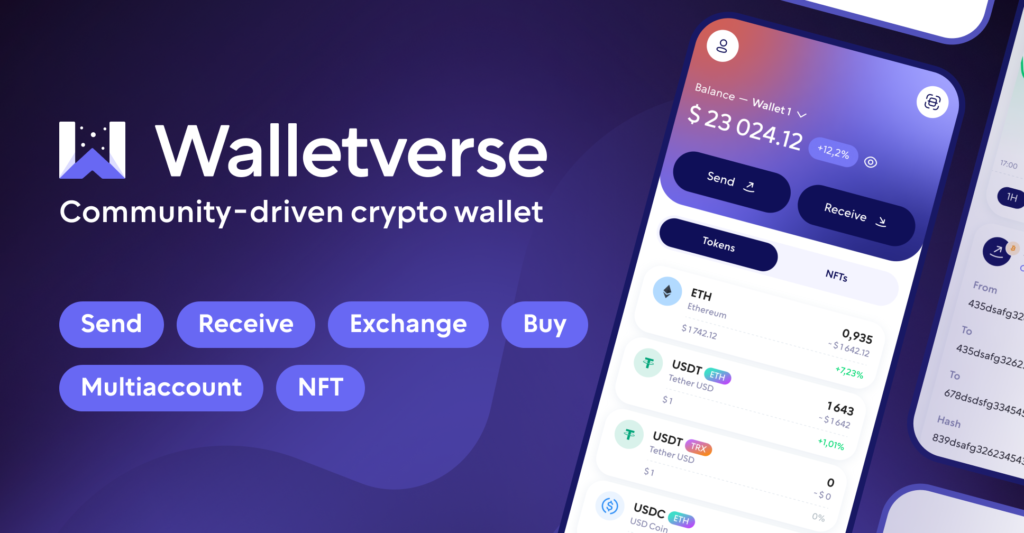
Walletverse is a versatile mobile crypto wallet designed for beginners and advanced users. It supports over 600 cryptocurrencies, offering users extensive options for managing their digital assets. The wallet emphasizes self-custody, allowing users complete control over their private keys and ensuring their assets remain secure. With a user-friendly interface, Walletverse makes buying, sending, and exchanging cryptocurrencies directly from your mobile device accessible.
Pros:
- Supports a wide variety of cryptocurrencies.
- User-friendly interface suitable for beginners.
- Strong security features like biometric authentication.
- Allows direct purchases using Apple Pay and Google Pay.
Cons:
- Currently only available as a mobile app.


2. Exodus
Exodus is renowned for its attractive design and intuitive user experience, making it ideal for newcomers to cryptocurrency. This wallet supports a variety of cryptocurrencies and features a built-in exchange for quick asset trading. Exodus prioritizes user privacy by storing private keys locally on the user’s device.
Pros:
- Visually appealing interface that’s easy to navigate.
- Integrated trading features within the app.
- No account setup is required, enhancing user privacy.
Cons:
- Limited hardware wallet support may concern security-focused users.
- Some advanced trading features are lacking compared to dedicated exchanges.
3. Ledger Nano X
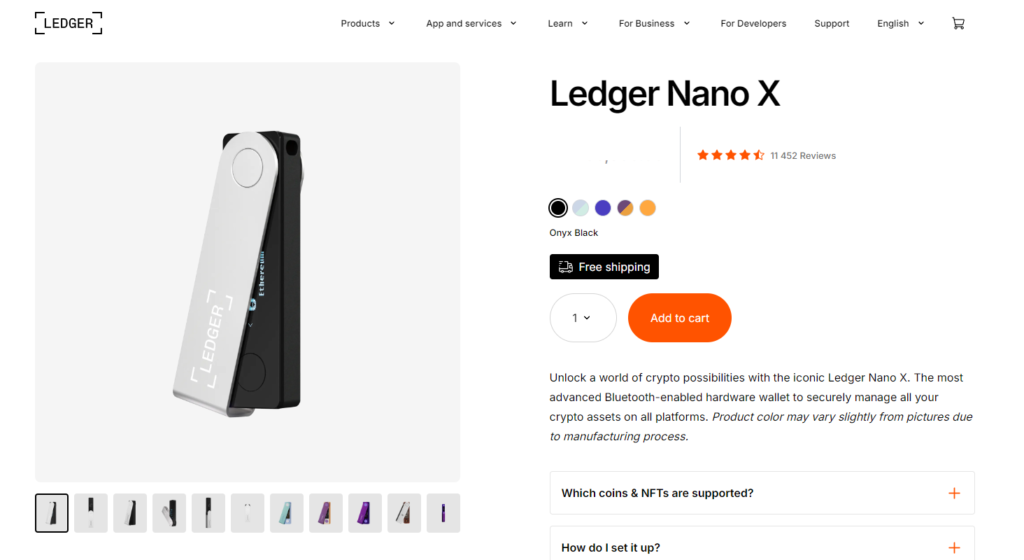
The Ledger Nano X is a premier hardware wallet that appeals to experienced users due to its high-level security features. It offers cold cryptocurrency storage, keeping assets offline and protected from potential hacks. The Bluetooth functionality allows users to manage their assets securely via mobile devices.
Pros:
- Exceptional security with cold storage capabilities.
- Supports a wide range of cryptocurrencies.
- Bluetooth connectivity for mobile access.
Cons:
- Higher price point compared to software wallets.
- The initial setup may be complex for beginners.
4. Trezor Model T
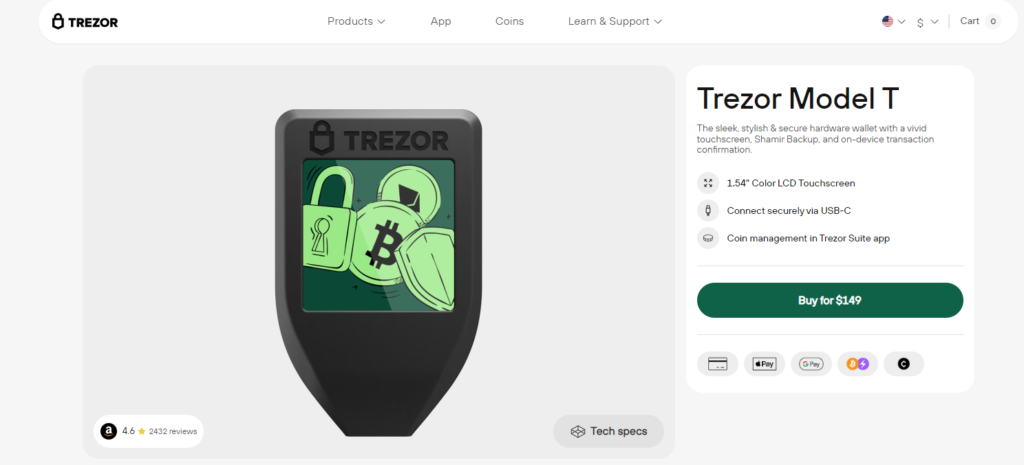
Trezor Model T is a highly regarded hardware wallet known for its robust security and user-friendly design. It features a touchscreen interface that simplifies navigation and offers extensive cryptocurrency support. Users have complete control over their private keys, ensuring high security.
Pros:
- Robust security features, including two-factor authentication.
- Touchscreen interface for easier management.
- Open-source software, enhancing transparency.
Cons:
- Higher cost compared to software wallets.
- Limited customer support for troubleshooting.
5. Coinbase Wallet
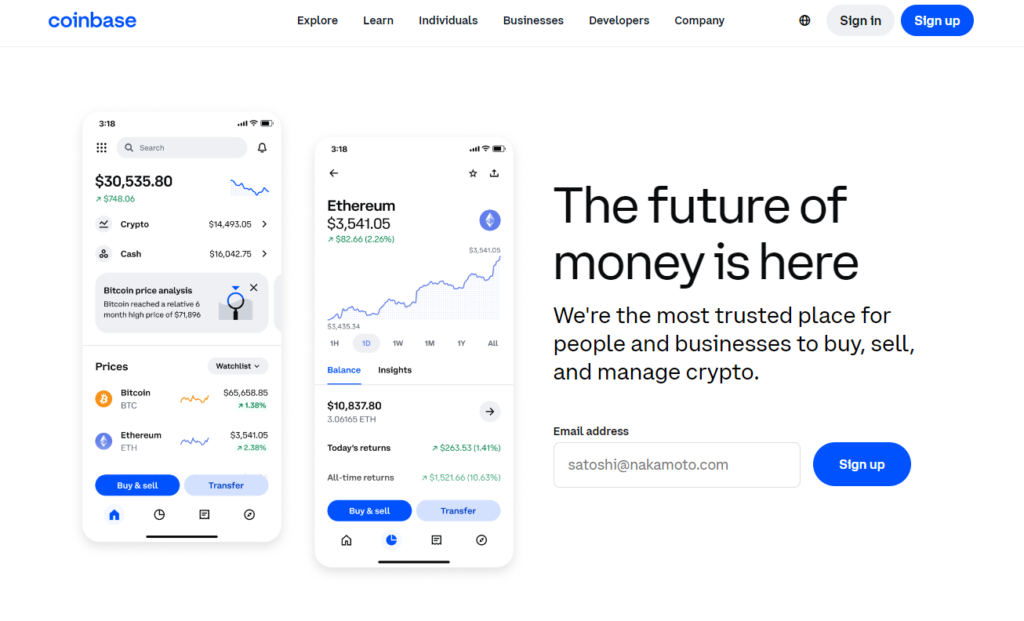
Coinbase Wallet provides a comprehensive solution for managing cryptocurrencies, NFTs, and dApps. It allows users to store various digital assets and interact seamlessly with decentralized applications, making it a versatile option for crypto enthusiasts.
Pros:
- Easy to use for beginners and integrated with Coinbase exchange.
- Strong security measures, including insurance for digital assets.
- Supports a wide variety of tokens and dApps.
Cons:
- Higher transaction fees compared to some other wallets.
- Centralized nature can be a concern for some users.
6. Trust Wallet
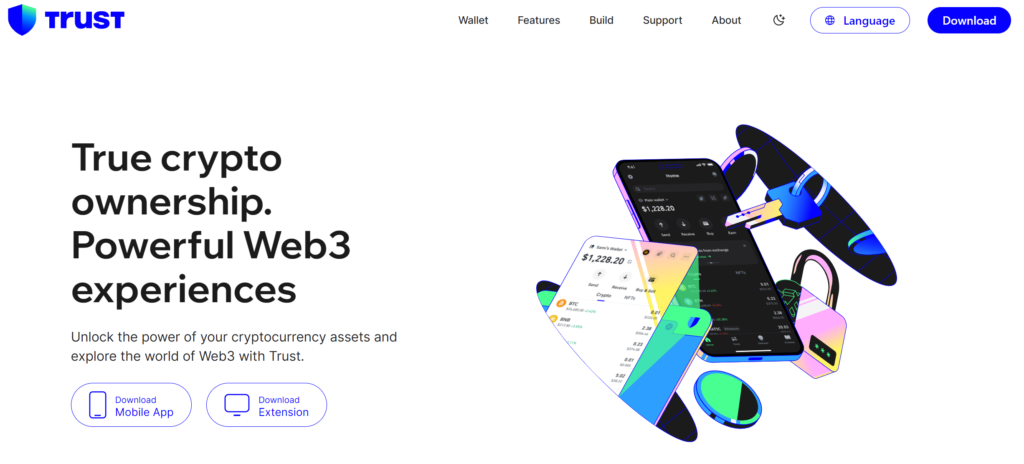
Trust Wallet is a mobile wallet known for its user-friendly interface and support for various tokens and cryptocurrencies. It also includes a built-in DApp browser, allowing users to access decentralized applications easily.
Pros:
- Supports numerous cryptocurrencies and tokens.
- Integrated DApp browser for accessing decentralized applications.
- Strong emphasis on user privacy and security.
Cons:
- Less robust security compared to hardware wallets.
- Reliance on an internet connection for transactions.
7. MetaMask

MetaMask is the leading Ethereum-based wallet and gateway to the world of decentralized applications, available as both a mobile app and browser extension. It allows users to store, send, and swap tokens on Ethereum and all EVM-compatible chains, making it a powerful tool for Egyptian users interested in DeFi and NFTs. The wallet integrates with hardware wallets like Ledger and Trezor for enhanced security and supports fiat on-ramps through various partners.
Pros:
Extensive dApp integration – the most widely used wallet in DeFi
Supports all ERC-20 tokens and major EVM networks
Open-source and regularly audited for security
Available on mobile and desktop with seamless synchronization
Cons:
Primarily focused on Ethereum ecosystem (though expanding to other chains)
Requires manual network configuration for some blockchains
Heavy reliance on users to safeguard their seed phrases
8. Binance
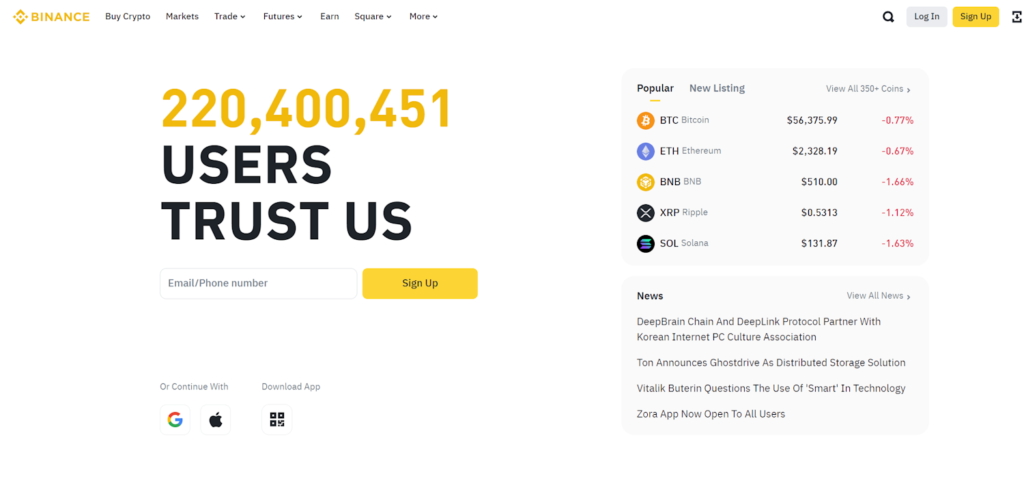
Binance is the world’s largest cryptocurrency exchange and offers an integrated wallet solution for users in Egypt. The platform allows easy access to buying, selling, and trading cryptocurrencies with support for EGP deposits and withdrawals through various payment methods. Binance provides both custodial exchange wallets and a separate non-custodial Web3 wallet for users who want full control over their assets.
Pros:
Access to the Binance Exchange with low trading fees
Supports a wide range of cryptocurrencies and staking options
Separate Web3 wallet available for non-custodial storage
P2P trading allows direct EGP transactions with local sellers
Cons:
Exchange wallet is custodial (not your keys, not your coins)
Complex interface may overwhelm beginners
Regulatory uncertainty in some regions
9. Crypto.com

Crypto.com DeFi Wallet is a powerful non-custodial wallet that gives Egyptian users complete control over their assets while offering access to the wider Crypto.com ecosystem. It supports over 1,000 assets across 30+ blockchains, including Bitcoin, Ethereum, Solana, and Cronos. Users can stake their crypto, earn rewards, and connect to various DeFi protocols directly from the wallet, all while maintaining self-custody of their private keys.
Pros:
Self-custody with private keys stored locally on your device
Wide multi-chain support and cross-chain swaps
Built-in staking and DeFi rewards
Integration with Crypto.com exchange and Visa card (where available)
Regular security audits and updates
Cons:
Some advanced DeFi features may require familiarity
KYC required for exchange integration (though wallet itself is non-custodial)
Occasional network fees for certain operations
10. Guarda Wallet

Guarda is a versatile non-custodial wallet available on multiple platforms, including Android, iOS, web, and desktop, making it accessible for Egyptian users regardless of their preferred device. It supports over 50 blockchains and thousands of tokens, allowing comprehensive management of diverse crypto portfolios. Guarda offers built-in exchange services, staking for PoS assets, and fiat purchase options via credit card or bank transfer.
Pros:
Multi-platform support across all major operating systems
Wide range of supported cryptocurrencies
Integrated exchange and staking features
No registration or KYC required for basic functions
Regular security updates and active development
Cons:
Some services (like exchange) are provided by third parties with varying fees
Interface can feel cluttered for users with simple needs
Customer support response times may vary
Conclusion
While there are various cryptocurrency purchasing options in Egypt, including exchanges and P2P platforms, storing your assets in a crypto wallet is often safer and more convenient. A good wallet provides reliable security and allows you to trade and exchange crypto assets actively. Try self-custodial wallet Walletverse for reliable protection of your assets and fast and secure transactions.
FAQ
Most frequent questions and answers
Popular crypto wallets in Egypt include Walletverse, Exodus, and Trust Wallet, each offering unique features for different user needs.
Yes, you can buy cryptocurrencies in Egypt through exchanges like BitOasis Binance and crypto wallets supporting direct purchases like Walletverse.
You can buy USDT in Egypt via exchanges like Binance or P2P platforms like LocalBitcoins. Additionally, some wallets like Walletverse allow for direct purchases of stablecoins.
Local regulations on cryptocurrency in Egypt are still evolving, but the government is becoming more open to crypto adoption.
Recommendations for secure wallet storage include using hardware wallets for significant amounts and ensuring your software wallets have strong passwords and two-factor authentication.
Risks of storing crypto on exchanges include potential hacks and loss of access to funds, which is why using a secure crypto wallet is often recommended.


